Posts tagged as:

Entrepreneur

Going Google

by Daria Steigman on February 7, 2013

Figure Walking, in Gray HazeI have a confession to make: My e-mail “system” has been a mess.

Microsoft Outlook was structured to pull & store e-mail from legacy Internet companies with poor Webmail interfaces and small storage capacities.  In came more and more mail, and the only way not to have two-thirds of your inbound e-mail bounced out before breakfast was to download and store it on your PC. This worked pretty well when everyone had only one device–a computer–on which they worked. And played. Then along came Research in Motion offering a seamless way for non-enterprise users (i.e., me) to both access e-mail on the go and still funnel it into Outlook for storage.

Then I went Android. And everything changed.

In 2013, it shouldn’t matter where you are or what device you use. 

But somehow it did. The “best” way I could come up with to make sure I saw my e-mail on the go was to forward a copy of everything to my Gmail account. Clearly this was not a great solution. And, yet, I persevered until my hosting company put in a new spam filter that immediately starting bouncing a lot of valid mail.

Did I mention it was a very crappy spam filter?

Enter the cloud.

I’ve been a little skeptical about the whole cloud computing model. Frankly, I still am. I’m not ready to store financial and other sensitive data online. More importantly, cloud computing depends on having Internet access. Which is not ubiquitous.

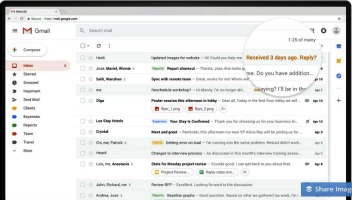
E-mail, however, is probably by definition the first cloud computing service. (Or the first one widely used.) So I signed up for Google Apps for Business the other day and moved my domain e-mail account to Google’s servers. The transfer process is pretty simple, and Owen on Google’s tech support team did an awesome job helping me navigate a couple of bumps along the way.

Now I can access my email where I am — and I’m not “cc-ing” myself all over the place. Sometimes it takes entrepreneurs a little while to make our lives easier, but we get there eventually.

What’s your e-mail solution? Have you “Gone Google”?

Photo by Derrick Tyson (Flickr).

Have you grabbed a free copy of Your Social Media Checklist? Download it today to get 9 tips for being findable and attracting the right customers for your business.

{ 1 comment }

Finding Your Community Engagement Sweet Spot

by Daria Steigman on February 4, 2013

LEGO Vikings on a Sea JourneyOne colleague is frustrated because the forums on her membership site are getting little traction. She’s set up “pull” options for people to get e-mail alerts to new conversations. She’s posted notices to her LinkedIn group. She’s reminded people at in-person meetings. But there’s little activity.

Another colleague is frustrated because the discussions for another membership site have migrated from the online forums (where they got little traction) to a members-only Facebook group. The problem is she’s not on Facebook.

There’s no secret sauce for success.

Finding your engagement sweet spot requires a lot of trial and error.

In the first example, people aren’t joining this network for access to online forums. They’re joining to connect, in person, with other like-minded entrepreneurs. There’s no critical mass of members and no compelling reason to post questions to a discussion thread. In fact, I can think of three groups I’d go to first for the same kinds of conversations that she hopes will happen on her site. And that’s just me.

Before you send out notices, you have to give me a reason to log in. And to log in the next time too.

In the second example, the community initially formed online. It’s made up of people who are social network savvy. They’re already using Twitter, and Facebook, and probably at least one or two other social networks as well. So it makes sense that members want to have conversations where they’re already hanging out.

You can’t make everyone happy, and you could go crazy trying.

I’m sorry for the woman who’s not on Facebook. Yes, she’s being left out of conversations happening there. But that’s her choice. It doesn’t mean setting up a way for people to connect on Facebook was a mistake. In fact, judging from the robust discussions, it’s been quite successful.

Most networks don’t strike lightening in a bottle. Google+ has millions of members, but it wasn’t until Google enabled groups that I found any real value in spending time there. Whether your online community is made up of a handful of Nationals fans or half a million brand enthusiasts, your engagement sweet spot is going to depend on where your audience is and what they’re looking for from you.

Photo by pasukaru76 (Flickr)

Have you grabbed a free copy of Your Social Media Checklist? Download it today to get 9 tips for being findable and attracting the right customers for your business.

{ 2 comments }

I Am Not an Athlete

by Daria Steigman on December 3, 2012

Zombie Fun Run Finisher MedalI overheard a woman at the gym the other day telling her friends that she’d once run a marathon. While they were oohing and aahing over her accomplishment, she added some caveat that I didn’t catch. Then she said, “I’m not an athlete.”

She might run the world’s slowest marathon (well, actually, I probably do), but she still covered 26.1 miles.

I am an athlete. Not in the Carl Lewis, Jackie-Joyner-Kersee, Meb Keflezighi mold–but I train like a pro and have a lot of distance under my feet. My goals might be less than Olympian, but I set them and I set out to achieve them.

So what does this have to do with business? I’m glad you asked.

Skills without attitude leaves you stuck in a rut.

There are a lot of smart business people. But only a few of them are successful as entrepreneurs. If you don’t believe in yourself, why would anyone else invest in your vision?

Photo by Stacey Huggins (Flickr).

Have you grabbed a free copy of Your Social Media Checklist? Download it today to get 9 tips for being findable and attracting the right customers for your business.

{ 0 comments }

5 Lessons on Entrepreneurship from a Pop Artist

by Daria Steigman on November 26, 2012

5 Lessons on Entrepreneurship from a Pop ArtistLast week, I went to see Roy Lichtenstein for inspiration.

The problem with running your own business is that you can spend so much time in the “stuff” of it that you forget to poke your head out and think big thoughts. So the Thanksgiving Holiday came around, and I decided I needed to break away from my routine, Two novels, one art exhibit, and five football games later, my mind is both quieted and racing with new energy. Which brings me to the art.

That would be the National Gallery of Art, which is currently housing a retrospective of Lichtenstein’s work. His artwork and the trajectory of his career are fascinating, and they provide five lessons from a master pop artist.

1. Great design is in the details. Lichtenstein took an ordinary composition book as the starting point for one of his works. What makes the painting different is that he turns the mottled black-and-white specks into dancing molecules of energy. The artist understood that composition isn’t just the product, but how you package it.

2. Stick to your strengths. Lichtenstein experimented off and on with the broad brush strokes more typically associated with Willem de Kooning and Franz Kline. They were good at that style; he was not. His “broad brush” paintings look forced and unnatural, a good reminder that you do your best work when you stick to what you do best–and break out from your strengths (see #3).

3. Improve, Don’t Imitate. At various points in his career, Lichtenstein created works of art that reflect other genres that he admired (e.g., Cubism, Chinese landscapes, Impressionism). The exhibit includes a series of three Rouen cathedrals. They are stunningly evocative of Monet‘s work while remaining true to Lichtenstein’s core form. The lesson for entrepreneurs is that you can learn and take from your competition, but don’t lose so much that you forget what makes your product unique.

4. Be Adaptable. Early on, Lichtenstein created his trademark dots using a small stencil that he moved around the canvas. The result was uneven dots. Later, he had large metal stencils built that provided for far more uniformity, and it doubtless was more efficient too. The pop artist understood that tools and technology evolve and you need to evolve with them.

5. Wow Your Customers. Any retrospective usually has a few amazing works of art, others that are museum-worthy but not top tier, and some stuff that’s merely okay. Sound familiar? Not everything you do will be your best, and that’s okay. But make sure the product (or service) you’re putting in front of your customers is the best of the best. One example: Drowning Girl. The composition is classic Lichtenstein and comic-strip comfortable–and then you read the caption. Then it’s completely different, and you’re smiling (and wowed).

What lessons have you taken from art? What artists inspire you?

Have you grabbed a free copy of Your Social Media Checklist? Download it today to get 9 tips for being findable and attracting the right customers for your business.

{ 0 comments }

How Marketing Is Like Well-Structured Theatre in the Round

by Daria Steigman on September 13, 2012

Sensory Overload at Piccadilly CircusA few years ago, my local Shakespeare company started experimenting with theatre in the round. The stage and seating were reconfigured, and the first production launched with great fanfare. Then I spent three hours watching the actors from the side.

The director had forgotten about his audience. Companies—Shakespearean or otherwise—do this at their peril.

I was reminded of this when talking with a colleague about Marketing in the Round. In the introduction, authors Gini Dietrich and Geoff Livingston write:

Customers—whether they are consumers or B2B—don’t consume singular media types. Most people don’t go home and visit Facebook for three hours. Nor do they singularly listen to the radio during their commute for information. Reality TV is not their only source of entertainment. Instead, customers consume a wide variety of media, fun and professional alike. This jambalaya of information presents the real challenge for marketers.

The authors are on a mission to help businesses refocus on how to connect with their audiences. The book is about reintegrating marketing communications, a concept which a lot of marketers got away from in the last decade as agencies opened up standalone digital shops and companies put their PR, Web, advertising, and other functions into separate departments.

You may think Marketing in the Round is just another book about marketing. But you would be wrong.

There’s no question that a lot of marketers will learn something reading Marketing in the Round. But Dietrich and Livingston’s book is an equally valuable resource for entrepreneurs and other business owners. The book is about the perils of silos and the need to think first about your business goals and your audience—and to create marketing communications approaches that resonate with the latter in order to achieve the former.

You can read my complete book review here.

Photo by Praktyczny Przewodnik (Flickr).

Disclosure: I consider both Geoff Livingston and Gini Dietrich friends, and Livingston gave me a copy of his book to read. But I only review books I think are worth reading and not because of friendship or free swag.

Have you grabbed a free copy of Your Social Media Checklist? Download it today to get 9 tips for being findable and attracting the right customers for your business.

Related Posts Plugin for WordPress, Blogger...

{ 1 comment }